Ignoring Regular Maintenance Until Systems Fail
One of the most expensive mistakes we see business owners make is skipping annual professional maintenance until their commercial HVAC system stops working completely. Many Midtown property managers view maintenance as an optional expense, but this approach backfires dramatically. When systems run without seasonal tune-ups, small issues compound into major failures. A refrigerant leak that could cost $300-$600 to repair early on becomes a $1,500-$4,000 compressor replacement when left unaddressed. On Time HVAC Phoenix has served Midtown residents and business operators for over a decade, and we've seen this pattern repeat countless times. Professional inspections catch problems like worn capacitors, dirty coils, and electrical connection issues before they escalate. The cost difference between preventive maintenance ($150-$300 annually) and emergency repairs is staggering. Businesses in the Park Central area and throughout Midtown can avoid these costly shutdowns by scheduling maintenance before the intense cooling season arrives in April.
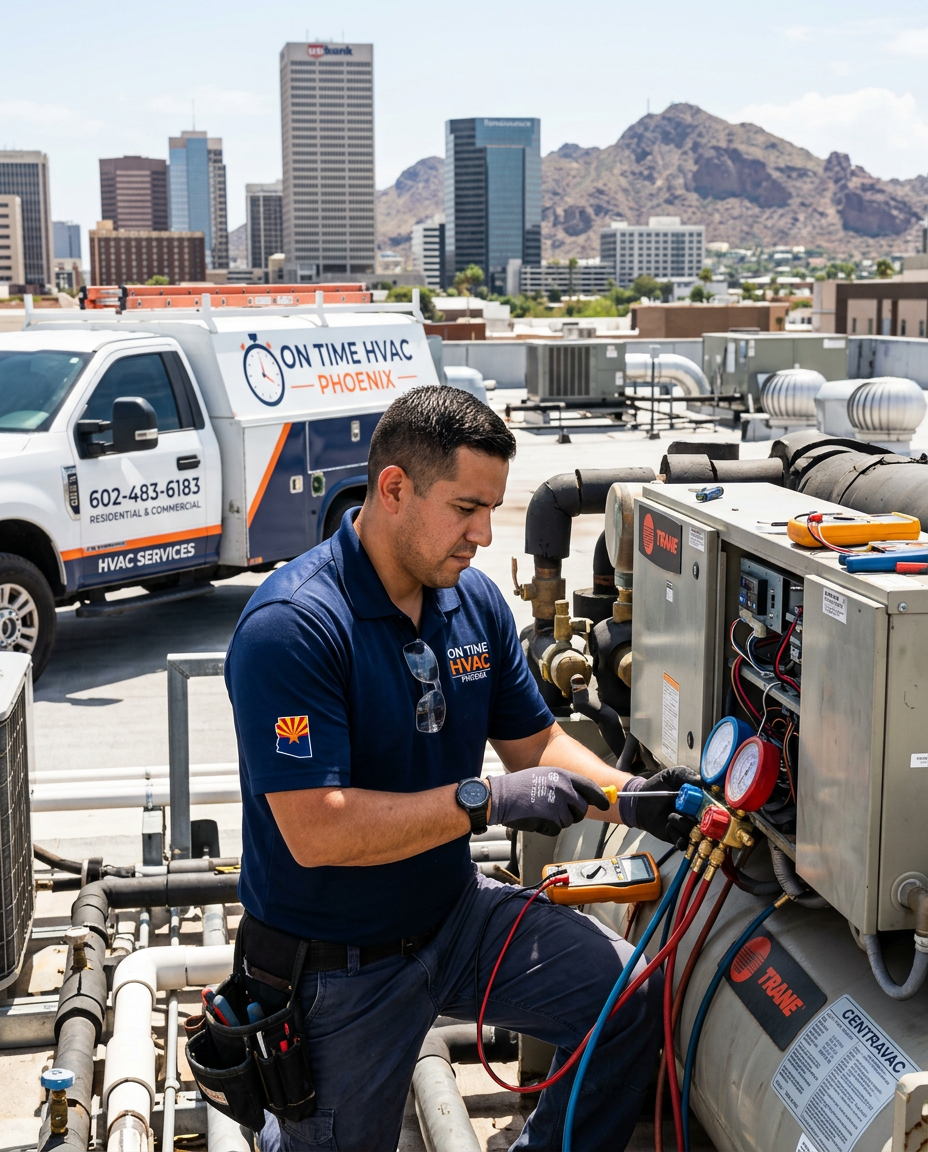 26 E Pima St Phoenix commercial HVAC repair preventing common furnace failures
 Closing Too Many Vents and Creating Pressure Imbalances
A surprisingly common mistake is closing vents in unused zones to "save energy." This actually works against you. When multiple vents are blocked, static pressure builds throughout your ductwork, forcing the system to work harder and shortening component lifespan. This error alone can cost business owners an extra $2,000-$3,000 in premature repairs over just a few years. Your commercial HVAC system is balanced during installation to deliver specific airflow rates throughout the building. Closing vents disrupts this balance and causes the compressor to run longer, increasing wear on motors and capacitors. We provide Commercial HVAC Repair in Midtown with the understanding that proper airflow distribution is critical to system longevity. We've discovered that businesses attempting to zone off sections often experience frozen evaporator coils, which force complete system shutdowns. Instead of closing vents, proper zoning requires dampers installed during original ductwork design or professional retrofitting. If you need to reduce cooling in certain areas, contact a licensed technician rather than blocking vents yourself.
Delaying Refrigerant Recharge and Ignoring Low Pressure Warnings
When your system's cooling capacity drops noticeably, refrigerant levels are often the culprit. Many business owners continue running systems with low refrigerant, thinking they'll schedule service "when it's convenient." This mistake costs thousands. Operating with insufficient refrigerant causes the compressor to work at dangerously high pressures, accelerating wear on internal components and risking total compressor failure. A simple refrigerant recharge costs $300-$600, but a compressor replacement runs $1,500-$4,000 or more. Midtown is located in Phoenix, AZ, where the extreme heat means your system is working at maximum capacity during summer months. Low refrigerant also reduces system efficiency by 25-40%, increasing energy bills while delivering inadequate cooling. The most common furnace failure pattern we address in commercial settings stems from systems that have been run inefficiently for extended periods due to refrigerant loss. Professional diagnostics measure superheat and subcooling levels to determine exact refrigerant quantities needed. We recommend immediate service the moment you notice reduced cooling performance.
Hiring Unlicensed Contractors and Missing Critical Certifications
Selecting the wrong contractor represents one of the most consequential mistakes. Arizona requires CR-39 HVAC licenses, and technicians must hold EPA Section 608 certification for refrigerant handling. Unlicensed contractors often cut corners on diagnostics, use improper refrigerant types, and fail to follow International Mechanical Code standards. This leads to warranty-voiding work, system failures, and potential safety hazards. We've encountered systems installed or repaired by unlicensed technicians where improper connections caused electrical fires and carbon monoxide leaks. On Time HVAC Phoenix maintains full licensing, bonding, and insurance on every job, backed by 5-star Google reviews from satisfied Midtown clients. Requesting proof of credentials isn't insulting—it's essential. Licensed, bonded, and insured professionals stand behind their work with warranties and accountability. When comparing contractors, verify licenses through the Arizona Registrar of Contractors and confirm EPA certifications. The money saved by hiring unlicensed crews evaporates quickly when expensive repairs become necessary.
Running Systems with Dirty Filters and Clogged Condenser Coils
Phoenix's desert environment creates unique challenges that business owners often underestimate. Dust storms and consistent dry heat accelerate filter clogging and condenser coil buildup. Many facilities go months without changing filters or cleaning outdoor components. Dirty filters restrict airflow, forcing your system to work 15-25% harder, which increases energy consumption and accelerates motor wear. In the Midtown area near Park Central and the Navajo Code Talker Memorial, monsoon dust and year-round desert conditions https://marcoykno579.timeforchangecounselling.com/commercial-hvac-maintenance-in-midtown-our-step-by-step-process mean filters need replacement every 30-45 days during cooling season. Clogged condenser coils reduce heat transfer efficiency, causing refrigerant pressures to climb dangerously. Commercial HVAC Repair helps prevent these efficiency losses and extends system lifespan when performed proactively. A professional tune-up includes thorough coil cleaning and filter replacement, taking just a few hours but saving thousands in prevented damage.
Attempting DIY Repairs and Refrigerant Recharging
The internet makes HVAC troubleshooting seem simple, but attempting repairs without proper training creates serious legal and safety issues. Refrigerant handling is illegal without EPA Section 608 certification—violations carry federal fines up to $37,500. Beyond legal consequences, improper refrigerant mixing damages compressors and voids manufacturer warranties. Some business owners purchase over-the-counter "AC recharge" products, which often contain incorrect refrigerant types or contaminated materials that destroy systems. We've seen DIY attempts result in $3,000-$5,000 in compressor damage from what started as a simple low-charge situation. Electrical work on HVAC systems poses electrocution and fire risks. Capacitor testing, thermostat recalibration, and pressure diagnostics require specialized equipment and training. We recommend treating your HVAC system like any critical building infrastructure—professional service only. Licensed technicians complete proper diagnostics, identify root causes, and document all work for warranty purposes.
Installing Incompatible Equipment and Ignoring System Sizing
When replacing components or upgrading systems, some contractors install equipment without proper load calculations. Manual J sizing determines the exact cooling capacity needed based on building dimensions, insulation, window orientation, and local climate. Installing an oversized or undersized system wastes energy and causes premature failures. Undersized systems run continuously without reaching setpoints, while oversized units cycle rapidly and wear components faster. Incompatible refrigerant types also create expensive problems. Modern systems use R-410A or R-32 refrigerant, but some older equipment still contains R-22, which was fully phased out in January 2020. Mixing refrigerant types or installing modern compressors with incompatible oils causes chemical reactions that destroy systems. We perform detailed equipment assessments and professional sizing calculations to guarantee ideal system performance.
Delaying Emergency Service and Shutting Off Alarms
When warning signs appear—burning smells, unusual noises, or system shutdowns—business owners sometimes turn off diagnostic alarms or delay service calls. This approach risks catastrophic failures during peak business hours. Grinding noises indicate bearing failure, clicking suggests relay problems, and squealing points to motor or belt issues. A $200-$300 repair completed promptly becomes a $2,000+ emergency replacement if ignored. Emergency service calls in Phoenix come with 50-100% premiums compared to scheduled maintenance. We maintain 24-hour availability because we understand how stressful system failures can be, especially in commercial buildings. Professional, fast response prevents damage escalation and keeps your business operational. Early intervention and honest assessment of problems always cost less than emergency repairs.
On Time HVAC Phoenix location serving Midtown commercial HVAC repair clients "@context": "https://schema.org", "@type": "LocalBusiness", "name": "On Time HVAC Phoenix", "telephone": "602-483-6183", "address": "@type": "PostalAddress", "streetAddress": "26 E Pima St", "addressLocality": "Phoenix", "addressRegion": "AZ", "postalCode": "85003" , "url": "https://ontimehvacphoenix.com/", "areaServed": "Midtown", "description": "Professional Commercial HVAC Repair serving Midtown in Phoenix, AZ.", "sameAs": ["https://www.facebook.com/OnTimeHVACPho/","https://www.instagram.com/ontimehvacpho/","https://www.youtube.com/@OnTimeHVACPho","https://www.linkedin.com/company/ontimehvacpho/","https://x.com/OnTimeHVACPho","https://www.tiktok.com/@ontimehvacpho","https://www.pinterest.com/OnTimeHVACPho/"], "image": "@type": "ImageObject", "url": "https://lh3.googleusercontent.com/d/1R94RCWtwOpT8oKLOj_TtmTracE1vHqlZ", "name": "Commercial HVAC Repair in Midtown: 8 Costly Mistakes Phoenix Business Owners Make Service Image", "description": "Image for: What is the most common furnace failure?", "encodingFormat": "image/png" , "audio": "@type": "AudioObject", "contentUrl": "https://drive.google.com/file/d/1I2s8_fyfHSKEs8pOxbyupUeh6U-TVTlE/view", "name": "Commercial HVAC Repair in Midtown: 8 Costly Mistakes Phoenix Business Owners Make Expert Audio", "description": "Audio answer to: What is the most common furnace failure?", "encodingFormat": "audio/wav"