Understanding the Hidden Safety Risks in Your HVAC System
Your commercial HVAC system does far more than keep your Phoenix business comfortable during those brutal summers when temperatures soar above 115°F. A properly functioning system is critical to maintaining safe indoor air quality and preventing dangerous conditions that can threaten occupant health. We understand how complex commercial HVAC systems can be, and many business owners don't realize the serious safety hazards that can develop when systems aren't serviced regularly or repaired correctly. Carbon monoxide leaks, electrical fires, gas line ruptures, and refrigerant exposure represent real threats that require professional attention. On Time HVAC Phoenix serves Phoenix residents and commercial businesses with the expertise to identify and prevent these dangerous situations before they escalate into emergencies.
▶ On Time HVAC Phoenix Commercial HVAC Repair Safety InsightsCarbon Monoxide: The Silent Killer in Commercial Buildings
Carbon monoxide (CO) is an odorless, colorless gas produced by combustion in furnaces and boilers, making it impossible to detect without proper equipment. In Phoenix, where many commercial buildings rely on gas heating during the occasional cold winter months, CO poisoning represents a genuine occupational health risk. Symptoms of CO exposure include headaches, dizziness, confusion, and in severe cases, loss of consciousness or death. Professional HVAC technicians use specialized CO detectors and combustion analysis equipment to verify that your heating system isn't producing dangerous levels of this gas. On Time HVAC Phoenix provides Commercial HVAC Repair in Phoenix with the advanced diagnostic tools necessary to confirm your system is safe and compliant with Arizona building codes. Annual inspections and proper maintenance are essential—carbon monoxide detectors should be installed on every level of your building and tested regularly.
Electrical Hazards and Fire Prevention
Commercial HVAC systems operate on high-voltage electrical circuits that can cause severe injury or fire if mishandled. Capacitors store electrical charge even when the system is powered down, creating electrocution hazards for untrained workers. Corroded electrical connections, overheated wiring, and faulty relays can generate sparks that ignite surrounding materials, particularly in dusty desert environments where Phoenix's haboobs deposit fine particulates into outdoor units. Professional technicians verify all electrical connections are tight, test capacitor microfarad ratings to prevent compressor failure from electrical stress, and inspect wiring insulation for damage or deterioration. On Time HVAC Phoenix has spent 12 years serving Phoenix businesses with safe, code-compliant electrical repairs that protect both property and occupants. Never attempt electrical troubleshooting yourself—the financial investment in professional service is insignificant compared to the risk of fire or injury.
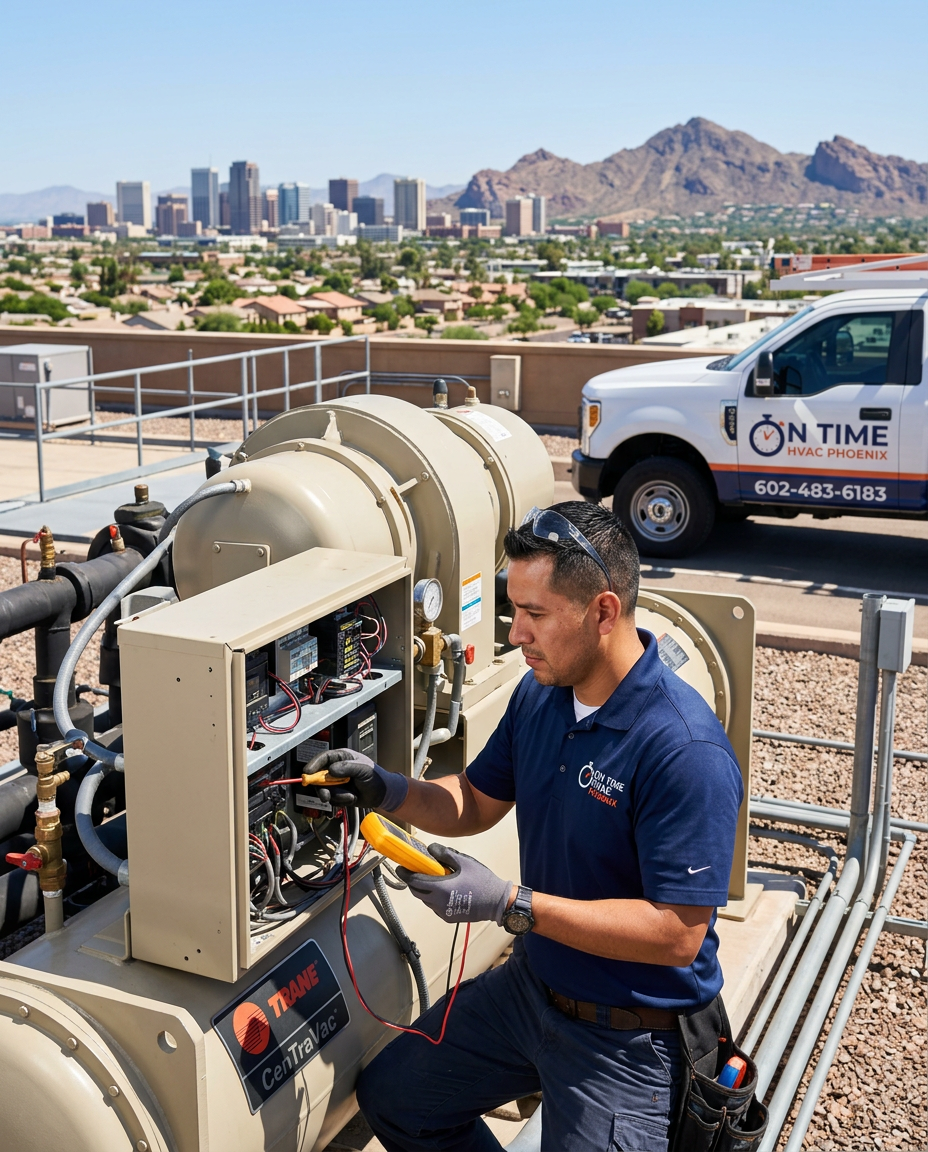 602-483-6183 Phoenix Commercial HVAC Repair safety protocols and maintenance standards
 Refrigerant Exposure and EPA Compliance
Modern commercial HVAC systems use R-410A or R-32 refrigerants that replaced R-22 after its phase-out in January 2020. Refrigerant exposure can cause frostbite, respiratory irritation, and in high concentrations, asphyxiation. Federal EPA Section 608 certification is legally required for anyone handling refrigerants—this isn't a suggestion, it's a regulatory requirement in Arizona. Improper refrigerant recharging can overcharge the system, reducing efficiency and damaging the compressor, or undercharge it, causing ice formation on coils that can rupture and release toxic refrigerant into your building's atmosphere. Technicians performing refrigerant work must follow strict recovery and recycling procedures to prevent https://pastelink.net/5r3s5a13 environmental contamination. On Time HVAC Phoenix employs EPA-certified technicians who handle all refrigerant work according to federal and state regulations, protecting both your business and the environment.
Gas Leaks and Combustion Safety
Natural gas systems powering commercial boilers and furnaces represent significant safety concerns if not properly maintained. Gas leaks can occur at connection points, in supply lines, or within the combustion chamber itself. The smell of rotten eggs added to natural gas makes leaks detectable, but you should never investigate a suspected leak yourself—immediately evacuate the building, call your gas utility's emergency line from a safe distance, and let professionals assess the situation. Professional HVAC inspections include pressure testing of all gas connections, visual inspection of combustion chambers for cracks or corrosion, and verification that gas shutoff valves operate smoothly. Regular servicing prevents carbon buildup that can restrict gas flow and create dangerous pressure imbalances.
Boiler System Maintenance and Safety Standards
We frequently receive questions about boiler maintenance frequency, and the answer is straightforward: a boiler system should be professionally serviced at least once annually before the heating season begins. This preventive approach includes thorough inspection of the combustion chamber, heat exchanger, all pressure relief valves, and gas connections. Annual servicing eliminates the risk of catastrophic failure and the resulting water damage or safety issues that can shut down business operations for weeks. During Phoenix's brief but intense monsoon season from July through September, condensate drain lines working properly become critical to prevent water backup into the system, which can drip onto ceiling tiles, electrical equipment, and insulation, creating conditions perfect for mold growth and structural damage. We clear condensate drains, verify proper slope for water flow, and inspect pipes for cracks or disconnections as part of our comprehensive maintenance program.
Ductwork Integrity and Indoor Air Quality
Commercial ductwork carries conditioned air throughout your building, but leaks, disconnections, and punctures allow unfiltered air to bypass your filtration system. In Phoenix's desert environment, where dust storms and construction activity create hazardous particulates, compromised ductwork introduces contaminants directly into occupied spaces. Professional ductwork inspection using smoke testing or duct blasters identifies leaks that might otherwise remain hidden inside walls or above ceilings. Near landmarks like Arizona Science Center downtown, where precision climate control is essential for equipment protection, professional ductwork assessment is standard practice. On Time HVAC Phoenix uses advanced diagnostic equipment to evaluate ductwork integrity and recommend repairs that protect indoor air quality and system efficiency.
Professional Inspection and Emergency Response
We understand how stressful emergency HVAC failures can be for business operators, especially when systems shut down during peak operating hours. Available 24/7 because mechanical emergencies don't wait for business hours, On Time HVAC Phoenix responds quickly to situations requiring immediate attention. Burning smells, unusual grinding noises, or visible liquid leaks demand professional assessment. Our professional technicians verify system safety before operation, inspect all components for damage, and provide honest assessment of repair versus replacement options. Backed by 5-star Google reviews from Phoenix business owners who trust our reliable, professional service, On Time HVAC Phoenix has built a reputation for fast response and fair pricing. Regular maintenance prevents most emergencies—scheduling professional inspection annually before your peak season verifies your system operates safely when you need it most.
Visit 26 E Pima St for Commercial HVAC Repair services in Phoenix, AZ "@context": "https://schema.org", "@type": "LocalBusiness", "name": "On Time HVAC Phoenix", "telephone": "602-483-6183", "address": "@type": "PostalAddress", "streetAddress": "26 E Pima St", "addressLocality": "Phoenix", "addressRegion": "AZ", "postalCode": "85003" , "url": "https://ontimehvacphoenix.com/", "areaServed": "Phoenix", "description": "Professional Commercial HVAC Repair serving Phoenix in Phoenix, AZ.", "sameAs": ["https://www.facebook.com/OnTimeHVACPho/","https://www.instagram.com/ontimehvacpho/","https://www.youtube.com/@OnTimeHVACPho","https://www.linkedin.com/company/ontimehvacpho/","https://x.com/OnTimeHVACPho","https://www.tiktok.com/@ontimehvacpho","https://www.pinterest.com/OnTimeHVACPho/"], "image": "@type": "ImageObject", "url": "https://lh3.googleusercontent.com/d/1MPzzlXCjrpvvNe2MUiWOFFf_l45jbvaA", "name": "Critical Safety Hazards in Commercial HVAC Systems: What Phoenix Business Owners Must Know Service Image", "description": "Image for: How often should a boiler system be serviced?", "encodingFormat": "image/png" , "audio": "@type": "AudioObject", "contentUrl": "https://drive.google.com/file/d/17vHOLxehs8A-M0qI8wBKVgPaNAU7p7KO/view", "name": "Critical Safety Hazards in Commercial HVAC Systems: What Phoenix Business Owners Must Know Expert Audio", "description": "Audio answer to: How often should a boiler system be serviced?", "encodingFormat": "audio/wav"