Understanding Multi-Unit HVAC Systems in Camelback East Village
Managing HVAC systems in multi-unit properties across Camelback East Village requires a fundamentally different approach than single-family home maintenance. Condos, townhomes, and apartment complexes present unique challenges that homeowners and property managers must navigate carefully. When your unit sits within a larger residential community, system responsibilities become complex—sometimes shared between individual owners and HOA management. We at On Time HVAC Phoenix serve Camelback East Village residents by helping both property owners and managers understand exactly where their maintenance obligations begin and end. Camelback East Village is located in Phoenix, AZ, a region where consistent cooling maintenance is absolutely essential. The distinction between shared systems and individual units directly impacts maintenance timelines, cost responsibility, and access logistics. Most multi-unit buildings feature either independent systems serving each unit or central systems shared across multiple properties. Understanding your specific system type is the first critical step toward proper maintenance planning.
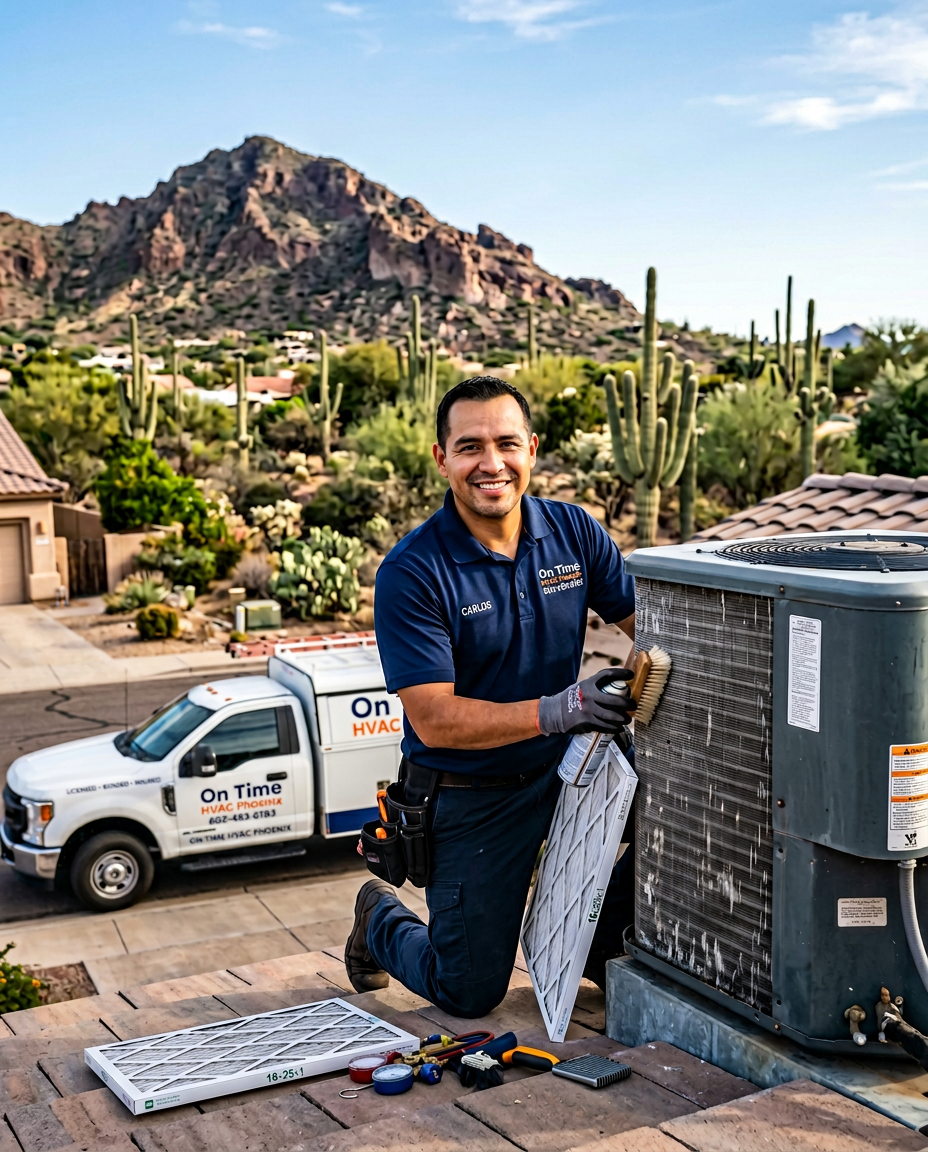 Professional multi-unit HVAC maintenance services in Camelback East Village
 Individual versus Shared HVAC Systems
Individual HVAC systems serve a single unit and are typically the responsibility of that unit's owner. In these scenarios, the owner pays for all repairs, maintenance, and eventual replacement. Shared central systems, by contrast, serve multiple units from a single location—often a rooftop or mechanical room. These systems require coordination between property management, HOA boards, and individual unit owners. We provide HVAC Maintenance in Camelback East Village for both configurations, understanding the legal and practical implications of each. When systems are shared, maintenance costs distribute across multiple properties, but scheduling becomes more complex because technicians must access common areas and may affect multiple residents simultaneously. Individual systems offer more autonomy but increase per-unit costs. Many newer multi-unit buildings in Camelback East Village use mini-split systems for each unit, combining flexibility with individual control. These ductless systems deliver exceptional efficiency and allow owners to maintain their own schedules.
HOA Rules and Maintenance Responsibilities
HOA documents clearly define which party bears responsibility for different HVAC components. Typically, the HOA maintains central equipment, ductwork, and shared mechanical systems, while individual owners handle equipment within their units. This division matters tremendously for budgeting and dispute prevention. When maintenance is deferred or ignored, responsibility questions escalate quickly. Camelback East Village homeowners frequently need HVAC Maintenance due to the region's extreme heat demands, making clear responsibility protocols essential. Your HOA bylaws should specify whether planned maintenance agreements fall under common area fees or individual obligations. Some HOAs require advance notification before contractors access shared spaces. Others demand proof of insurance and licensing verification. We respect these protocols and coordinate directly with property management to confirm access requirements and scope of work. Emergency situations—like complete system failure during 115-degree heat—bypass standard procedures, but preventive maintenance should always follow established HOA guidelines.
Landlord and Tenant Obligations
Arizona tenant law specifies that landlords must provide habitable housing, including functional cooling systems capable of maintaining interior temperatures during extreme heat. Tenants cannot legally be held responsible for system repairs unless they caused damage through misuse. Landlords bear the legal obligation for major repairs and replacement, while tenants typically handle filter changes and basic thermostat adjustments. Disputes arise when systems fail suddenly and tenants must prove the landlord delayed repairs unreasonably. Professional maintenance records protect both parties by documenting system condition and preventing emergencies. We help landlords maintain compliance by scheduling regular inspections that verify system functionality before cooling season arrives. Furnace igniters in gas heating systems typically survive 4-7 years under normal conditions, though desert climates with dusty environments can shorten this lifespan significantly. When igniter failure occurs, the entire system loses heating capability—a serious issue during rare Phoenix winter freezes.
Access Coordination and Service Scheduling
Scheduling HVAC maintenance in multi-unit properties requires coordination with property management, tenant notification, and access confirmation. Many HOAs require 48-hour advance notice before technicians enter common areas. Some demand scheduling through specific management offices rather than direct contractor contact. These requirements protect resident privacy and security. We coordinate directly with property managers to confirm access times, necessary documentation, and any special entry procedures. We understand the urgency of maintaining systems during Phoenix's brutal cooling season, so we schedule efficiently without disrupting residents. Technicians must carry proper identification and follow HOA-mandated protocols upon arrival. Insurance documentation becomes critical when working on shared systems—property managers rightfully demand proof that contractors are bonded and carry liability coverage. Multi-unit buildings near SAGE Counseling, Inc. in the Camelback East Village area often have strict access policies requiring property management presence.
Preventive Maintenance Planning for Multi-Unit Communities
Preventive maintenance in multi-unit settings requires annual planning and budget coordination between HOAs and individual unit owners. Central systems typically need professional inspection before cooling season begins—ideally March or April in Phoenix. Individual units should follow the same schedule to catch problems before extreme temperatures arrive. Many HOAs now offer group maintenance agreements where all residents participate in planned care, reducing per-unit costs and confirming consistent service quality. We back our maintenance recommendations with 5-star Google reviews from satisfied Camelback East Village residents who trust our professional approach. Filter changes occur more frequently in desert climates where dust storms clog equipment rapidly. Condenser coil cleaning becomes essential when outdoor units accumulate mineral deposits from hard water and desert dust. Professional technicians measure refrigerant levels, verify electrical connections, and assess component wear that predict future failures.
Cost Allocation and Budget Management
Understanding how maintenance costs distribute across multi-unit properties prevents disputes and confirms budgeting accuracy. Central system repairs typically split evenly among benefiting units, while individual unit work remains the owner's sole responsibility. HOAs should establish maintenance reserves covering anticipated repairs and regular service calls. We help HOAs project realistic maintenance costs and justify proposed budgets to residents. Service call fees range from $75 to $150 for diagnosis, while refrigerant recharges run $300 to $600 depending on system size. Capacitor replacement typically costs $150 to $400, while compressor failures demand $1,500 to $4,000 investment. Annual maintenance agreements for multi-unit properties provide cost predictability and confirm technicians perform regular inspections before problems become emergencies.
Special Considerations for Phoenix's Desert Climate
Phoenix's extreme summer heat creates HVAC demands unmatched in most American cities. Systems operate continuously during peak season, experiencing wear that accelerates compared to moderate climates. Dust storms clog outdoor condenser units rapidly, forcing frequent cleaning to https://privatebin.net/?782056904a56d32e#2KByvEqYebBdfxzhjc4otypUCrfrqUGb6zRJaQybwQhH maintain efficiency. Hard water deposits accumulate in cooling coils, reducing performance and increasing energy consumption. Monsoon season humidity spikes from July through September, creating moisture challenges. Multi-unit buildings experience compound effects when shared systems serve numerous residents simultaneously. We've served Camelback East Village and nearby Arcadia Gardens for over a decade, learning exactly which preventive measures work best in our local climate. Professional technicians perform static pressure testing, temperature differential verification, and superheat measurements that confirm system function before problems escalate.
Licensing and Regulatory Compliance
Arizona ROC licensing requirements apply regardless of property type. Technicians must hold CR-39 HVAC licenses and EPA Section 608 refrigerant certifications. Many HOAs rightfully demand proof of licensing before allowing contractors access to mechanical systems. Compliance with International Mechanical Code standards applies to both residential units and commercial multi-unit buildings. We maintain all required licenses and certifications, providing documentation upon request. Our team members understand ASHRAE standards, SEER2 minimum ratings, and refrigerant regulations including the complete phase-out of R-22 that occurred in January 2020. Current systems use R-410A or R-32 refrigerants that comply with environmental regulations and equipment specifications. Property managers benefit from working with licensed professionals who understand these complex requirements and maintain compliance documentation.
Visit On Time HVAC Phoenix at 26 E Pima St for expert multi-unit HVAC maintenance "@context": "https://schema.org", "@type": "LocalBusiness", "name": "On Time HVAC Phoenix", "telephone": "602-483-6183", "address": "@type": "PostalAddress", "streetAddress": "26 E Pima St", "addressLocality": "Phoenix", "addressRegion": "AZ", "postalCode": "85003" , "url": "https://ontimehvacphoenix.com/", "areaServed": "Camelback East Village", "description": "Professional HVAC Maintenance serving Camelback East Village in Phoenix, AZ.", "sameAs": ["https://www.facebook.com/OnTimeHVACPho/","https://www.instagram.com/ontimehvacpho/","https://www.youtube.com/@OnTimeHVACPho","https://www.linkedin.com/company/ontimehvacpho/","https://x.com/OnTimeHVACPho","https://www.tiktok.com/@ontimehvacpho","https://www.pinterest.com/OnTimeHVACPho/"], "image": "@type": "ImageObject", "url": "https://lh3.googleusercontent.com/d/1YZtWna7XEhjSxUOruWWN3eA0yMuidBJl", "name": "Multi-Unit HVAC Maintenance in Camelback East Village: HOA Property Guide Service Image", "description": "Image for: What is the life expectancy of a furnace igniter?", "encodingFormat": "image/png" , "audio": "@type": "AudioObject", "contentUrl": "https://drive.google.com/file/d/1iNjJvzs6zG6vbvAlFxNisOjxv8zl1Do3/view", "name": "Multi-Unit HVAC Maintenance in Camelback East Village: HOA Property Guide Expert Audio", "description": "Audio answer to: What is the life expectancy of a furnace igniter?", "encodingFormat": "audio/wav"